Lawrence Wray
But when we go bathing and strip, suddenly we have slender legs again
and slight shoulders. We are no longer soldiers, but little more than boys…
—Rainer Maria Remarque
Quiet in their rooms, their minds rove.
……….And they rove for a chance to be useful again.
……………And rove for that country they left
in the night woods along the state route
……….so long ago, but find still in a sound, an odor
……………intruding of gasoline and burning rubbish
at the Quick Mart. They listen to morning radio stock-still,
……….remember bridges, stream-beds, standing back to back.
……………Remember comrades, how they served
the larger ideal, when they first were married,
……….on first tour, when their children were being born
……………back home, when their daughters were
the toast of the barracks. And they rove. And gradually,
……….some say one day but mean since the war,
……………the scope of their lives narrows until,
at 70, they are telephone fathers, perhaps
……….a country away from their daughters. And sons
……………long motherless, not the twenty year olds
caught between the country of becoming and here,
……….but grandfathers now, surrounded by photos of infants
……………who’ve grown remarkably different
every other year when they visit, caught between
……….the body of their birth, entire, and the night woods,
……………and what tore it so long ago: The body,
its radiance in other people’s hands at the moment
……….it breaches the world at birth, passed into hands, bare,
……………belonging to others when it opens and opens
more than they can hold, when some mean God.
……….They don’t look any more to wade across a rough river
……………in the DMZ. They give blood to the cause
when others depend upon it, that breath, that radiance,
……….that birth. And because it is what their bodies still do,
……………they tremble. Not with frailty, but tremble,
and what creeps into their waking—not with the first
……….urgings of some new birth, but because, at last,
……………they are invisible, they tremble with rage, they rove
and they rove—and what creeps into their waking,
……….when sunlight bathes them in the morning woods,
……………is that they are relics that breathe, ruined machines
on a ruined field. And they pray for a chance to be
……….heard, seen, felt—to mend their hearts, their children’s
……………first hearts at least once, again—beyond
monuments littered with paper bags and pigeon shit,
……….the cannons stuffed with candy wrappers.
……………Beyond the TV jabbering in bedrooms,
that ghostly light covering the war build up day and night,
……….and the constricted quarter of their existence,
……………and the reservists, by thousands, on call.
–
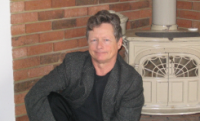
Lawrence Wray’s poems have appeared in Paper Street Press and the Indiana Review, and online at The Pittsburgh Quarterly and La Fovea. He studied comparative literature and philosophy at Binghamton University, and English and Irish at Duquesne University. For many years he has lead services at Unitarian Universalist congregations in the Pittsburgh region, and homeschools his daughters. Two of his poems are forthcoming in Sentence 7.


Pingback: A Morning of Orange Hands « qarrtsiluni